If you are looking for a card binder, you will soon come across two terms: 4-pocket and 9-pocket. The number tells you how many cards fit on one page. It sounds like a detail, but it decides how big your binder is, how your collection looks when you flip through it and whether it is easy to take along. Here we compare a 4-pocket vs 9-pocket binder, so you know which one fits the way you collect.
What do 4-pocket and 9-pocket mean?
A pocket is one slot in a sheet. A 4-pocket binder has four pockets per page, in two rows of two (2 × 2). A 9-pocket binder has nine, in three rows of three (3 × 3). Because you fill the sheets on both sides, every sheet counts as two pages.
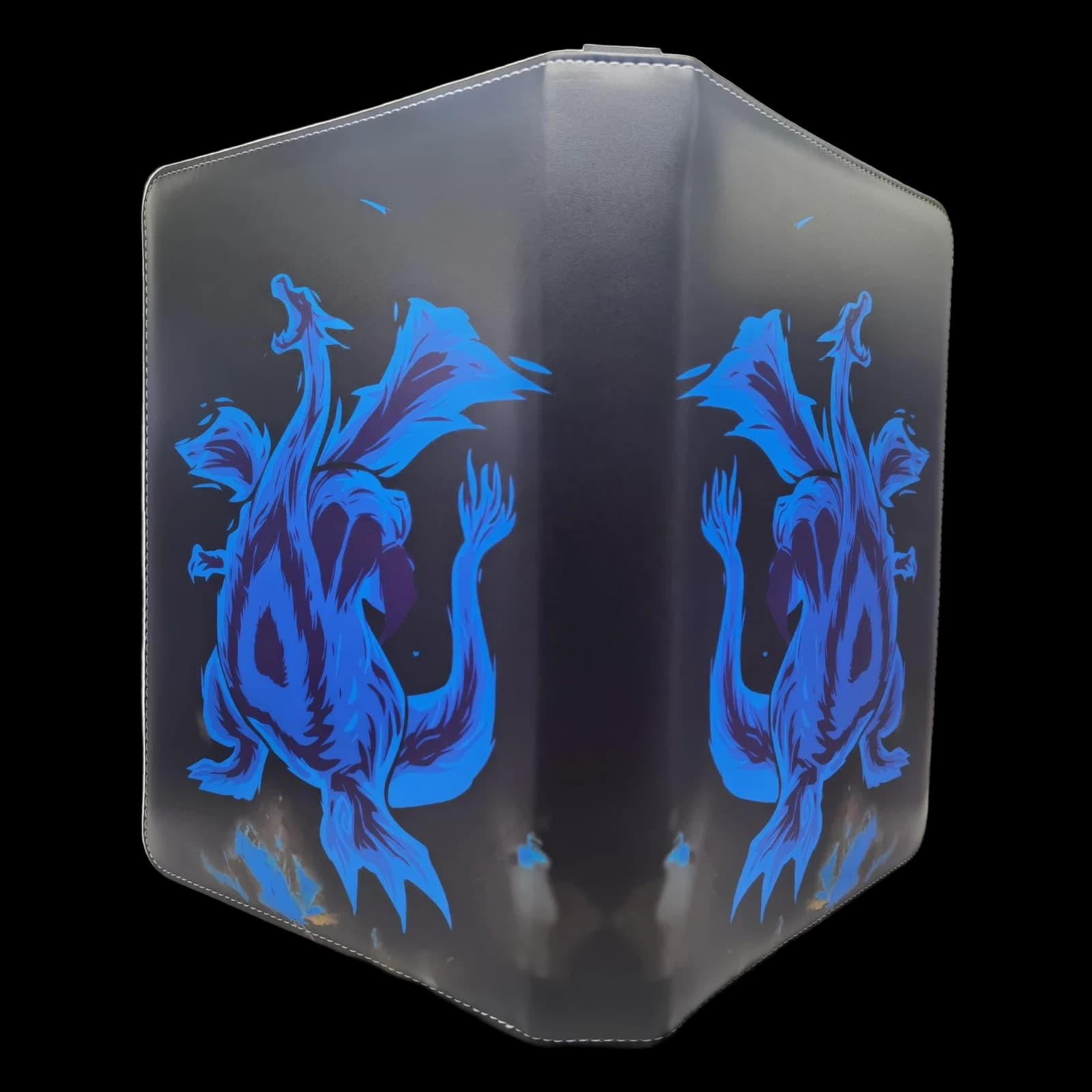
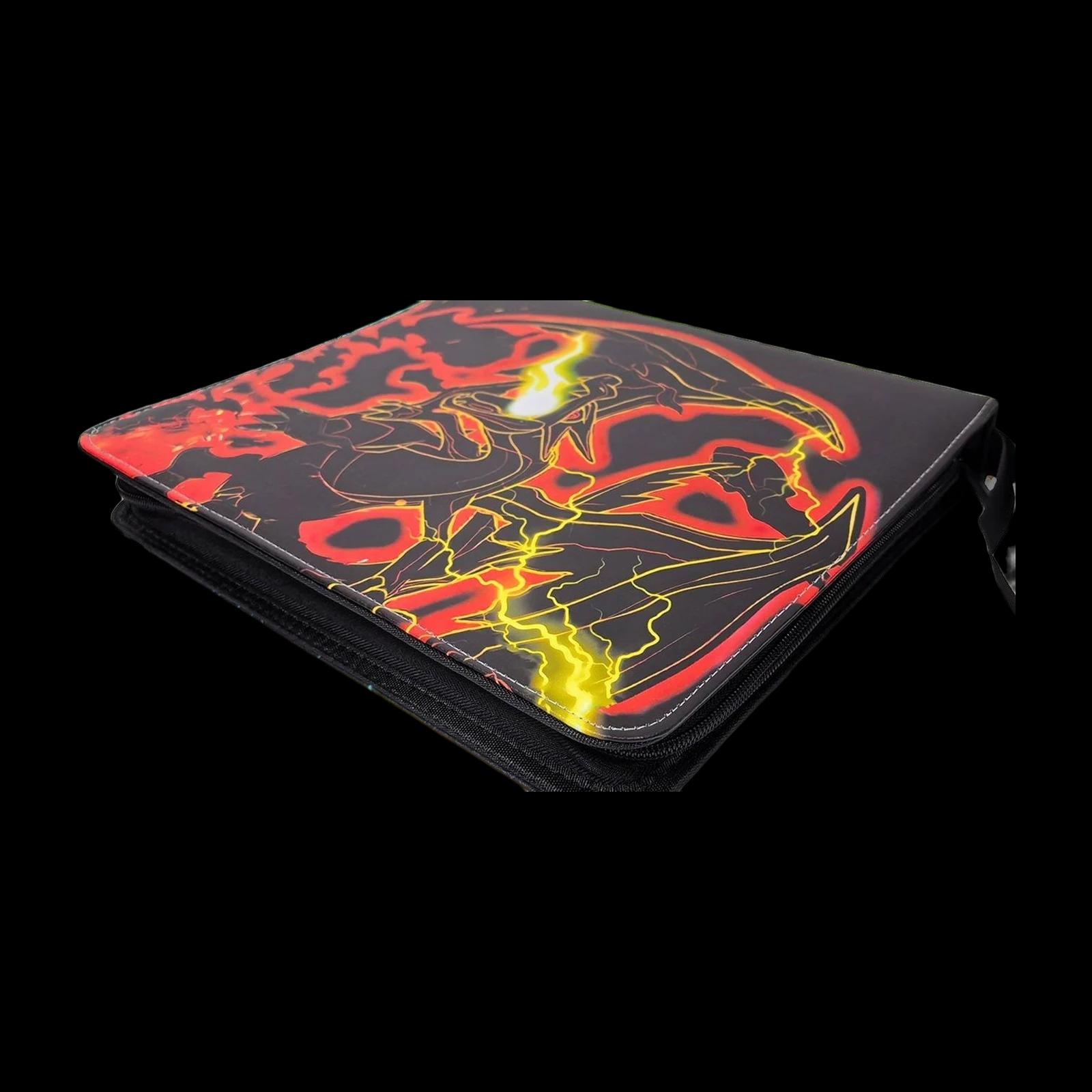
After that the maths is simple: pages times pockets per page is the number of cards that fit. For the Blue Blaze Dragon that is 90 pages × 4 pockets = 360 cards. For the Red Blaze Dragon it is 100 pages × 9 pockets = 900 cards.
A 4-pocket binder: small and handy
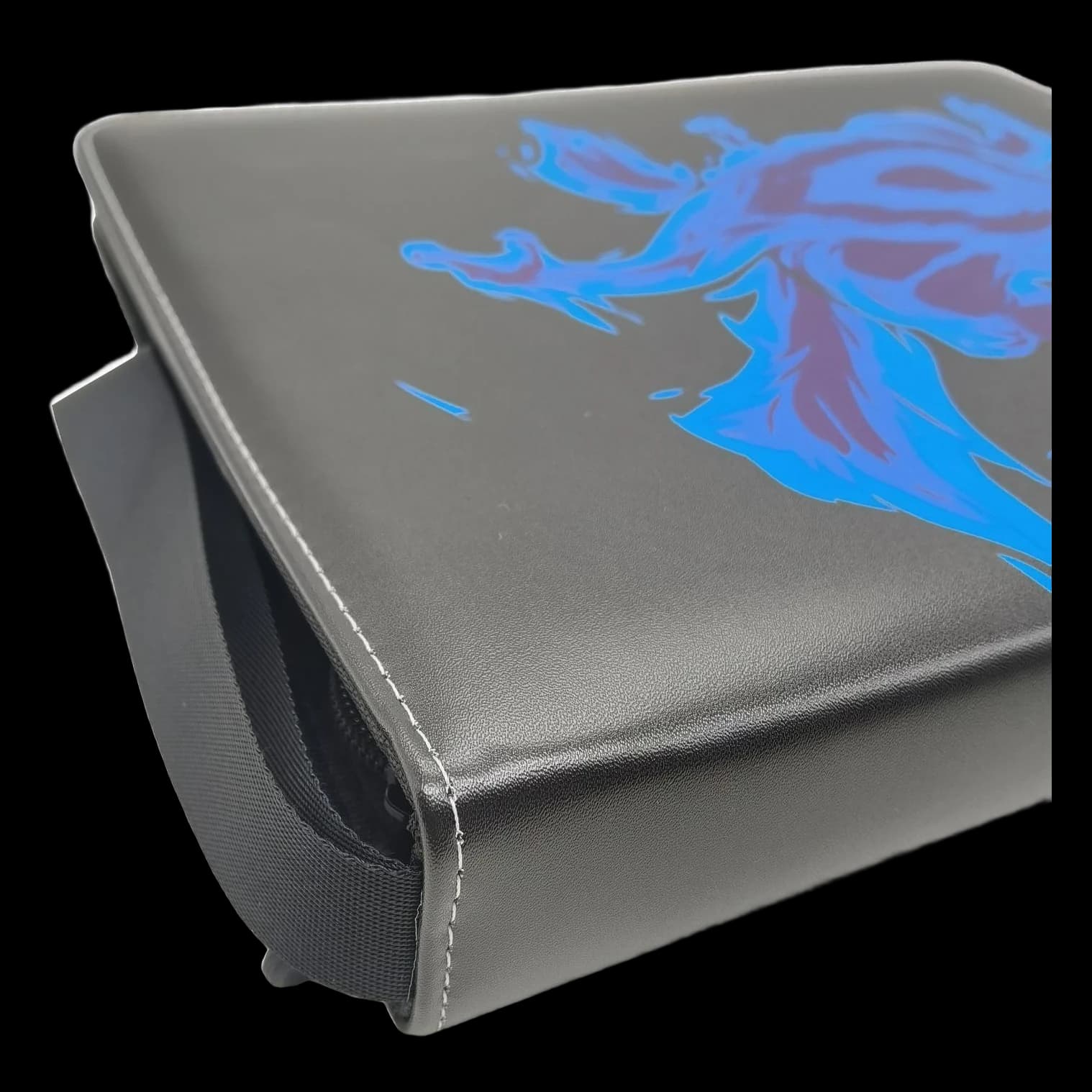
A 4-pocket binder is smaller, because a page is only two cards wide. Closed, the Blue Blaze Dragon measures 18 × 24 × 4.5 cm, smaller than an A4 sheet. It fits in a school bag or backpack and sits nicely in your hand while you flip through it.
Four cards per page also feels calm. Every card gets more attention, which is great for your favourites or a small collection of one Pokémon or one set. A 4-pocket binder suits you if:
- you often take your cards with you, to school, a game night or a trading event;
- you want to keep part of your collection separate, like your trade cards or one set;
- you are just starting out and do not have hundreds of cards yet;
- you are looking for a gift for a young collector.
A 9-pocket binder: the whole set at once
A 9-pocket binder is the classic collector's binder. A 3 × 3 page shows nine cards side by side, and an open binder even shows eighteen. That makes it ideal for showing a complete set in set number order. Closed, the Red Blaze Dragon measures 27 × 33 × 6 cm and has room for 900 cards.
A 9-pocket binder suits you if:
- you want to keep large sets, or several sets, in one binder;
- your binder mostly stays at home on the shelf;
- you like to see lots of cards at once, for example to spot which ones are still missing;
- your collection is growing fast.
The differences side by side
- Pockets per page: 4 (2 × 2) versus 9 (3 × 3).
- Cards: 360 in the Blue Blaze Dragon, 900 in the Red Blaze Dragon.
- Size closed: 18 × 24 × 4.5 cm versus 27 × 33 × 6 cm.
- Both: a zip all round and a wrist strap.
Which one for which collection?
Start by looking at the size of the sets you want to collect. Modern Pokémon sets often have more than a hundred cards, and with the extra rare cards added it quickly becomes more. If you want such a set complete in one binder, a 9-pocket binder is the logical choice. A 4-pocket binder is too small for that, but perfect for a selection: your top fifty, your trade pile or the cards of one Pokémon.
Also think about where your binder spends most of its time. On a shelf, the size hardly matters. If it travels a lot, you will notice the difference in your bag straight away. Read how to take your cards to a trading event safely.
Or both: large at home, small on the go
Many collectors use two binders. The large one stays at home with the complete sets, the small one comes along with the cards you want to show or trade. That way you never carry your whole collection, and your best cards stay safe at home.
Whichever you choose: one card per pocket, and do not fill the binder beyond what it is made for. Read how in 7 tips to store your Pokémon cards. Or see both binders side by side.